
The Cinematic Orchestra
https://www.youtube.com/playlist?list=PLhpie2_Reg-dJCEgJ7O4ksaXqkTywepo_
Artist Facts
Active: 1999-Present
Name: The Cinematic Orchestra
Genre: Downtempo, trip hop, electronica, nu jazz
Birth Date: 1999
Place of Birth: London, England
Artist Background
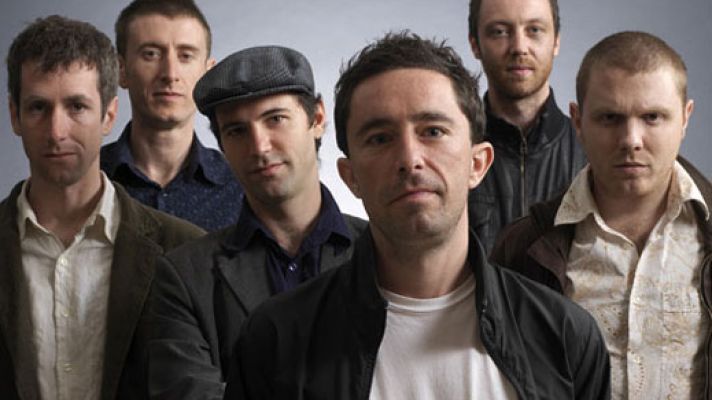
The Cinematic Orchestra is a British electronic music and nu jazz group that hails from London. Signed to independent record label Ninja Tune, the group includes founder Jason Swinscoe, Patrick Carpenter on turntables, drummer Luke Flowers, Tom Chant on saxophone, Nick Ramm on piano, guitarist Stuart McCallum, and Phil France on double bass.
The Cinematic Orchestra has a distinct sound that blends studio production with live performance. This is achieved through the combination of a live band and improvisation alongside electronic elements and turntable techniques. Their studio recordings often incorporate live material remixed with jazz improvisation and electronic textures, creating a sound that is atmospheric and difficult to categorize.
Former members include Jamie Coleman, T. Daniel Howard, Federico Ughi, Alex James, Patrick Carpenter, and Clean Sadness.
While a fine art student at Cardiff College in 1990, Jason Swinscoe formed the group Crabladder and released a single on his own label. In 1994, he worked as a disc jockey on the south London pirate radio station Heart FM. By 1999, Swinscoe had developed a new vision for a musical project and formed The Cinematic Orchestra. The band’s debut album, released that same year, received critical acclaim and led to their invitation to perform at the Director’s Guild Awards ceremony during the presentation of the Lifetime Achievement Award to film director Stanley Kubrick.
Artist Music Career
The band continued to define its identity in 2001 by composing a live score to accompany a screening of the 1929 Soviet film Man with a Movie Camera, directed by Dziga Vertov. The project was later toured internationally and released as an album inspired by the film.
Elements developed during the Man with a Movie Camera project were incorporated into Every Day, the group’s subsequent album, which reached number 54 on the UK Albums Chart in May 2002.
The group’s creative output continued in 2006 with a reinterpretation of Radiohead’s Exit Music (For a Film) for the compilation Exit Music: Songs with Radio Heads. Their version featured a slower tempo, clear instrumental separation, and the use of samples from the original recording.
In May 2007, The Cinematic Orchestra released Ma Fleur, an album that featured vocal performances from Fontella Bass, Lou Rhodes, and Patrick Watson. The project further established the group’s cinematic and emotionally driven approach to composition.
The group expanded further into film scoring in 2008 with their soundtrack for the French documentary The Crimson Wing: Mystery of the Flamingos. Steve McLaughlin collaborated on the production, and the score was later performed live with the London Metropolitan Orchestra at Union Chapel in Islington on September 17, 2009.
Two weeks later, the soundtrack received international recognition at the Jackson Hole Wildlife Film Festival in Wyoming. In November 2010, the group performed at the twentieth anniversary gala of the Ninja Tune label at the Royal Albert Hall.
In 2011, The Cinematic Orchestra developed In Motion, a collection of works created for avant-garde short films and premiered at the Barbican. The project featured contributions from Austin Peralta, Grey Reverend, Dorian Concept, and additional guest musicians. These compositions formed the basis of the album Motion #1, released in 2012.
In late 2016, the group released the single To Believe featuring vocalist Moses Sumney, ahead of their 2017 album To Believe. The release marked a return to vocal-led songwriting while retaining the group’s cinematic identity.
Following 2017, The Cinematic Orchestra continued to perform selectively while focusing on long-form projects, film collaborations, and orchestral performances. Their live shows remained a central part of their identity, often featuring expanded ensembles and site-specific arrangements.
Artist Major Works and Achievements
- Sold out the Royal Albert Hall on two occasions
- Sold out the Sydney Opera House
- Performed at numerous international festivals across Europe, North America, Asia, and Australia
- The track To Build a Home has been streamed more than 60 million times worldwide
- The track Arrival of the Birds was featured in the end credits of the Oscar-winning film The Theory of Everything
- In 2007, To Build a Home peaked at number 96 on the French singles chart
- Won Best Original Score for The Crimson Wing: Mystery of the Flamingos at the Jackson Hole Wildlife Film Festival in Wyoming on October 1, 2009
Their music continues to be widely used in film, television, and advertising, further extending their influence beyond traditional album releases.
Looking Ahead and Upcoming Developments
As of 2026, The Cinematic Orchestra remains an active and respected presence in the international music scene. The group is expected to continue performing curated live shows in major cities, often accompanied by orchestras or visual installations. Anniversary performances of Man with a Movie Camera and orchestral presentations of Ma Fleur and To Believe have been discussed for upcoming seasons at select concert halls and festivals.
The band is also anticipated to contribute to future film and visual media projects, continuing their longstanding relationship with cinematic storytelling. These upcoming activities reinforce The Cinematic Orchestra’s reputation as pioneers of genre-blending music that bridges jazz, electronic production, and film composition.


